Search results for tag #unix
A question for you kind folk: What would be the best filesystem to use on a partition to be shared by NetBSD and Gentoo?
I'm planning to set up a dual boot system to sort of A/B test them to see which works best for me for different things, and I'd like a data partition that they can both use.
My guess is that I will end up with at least one computer running each of these (where I am currently running Debian on everything).

Strategic mistake: I assumed pihole had a bsd-compatible package. It doesn't. Now I have a working netbsd system on my ad blocking system, but no actual ad blocker.
Right now trying to see if I can get containers to work on netbsd
Or I just switch to some other software.
Although pihole is at least convenient.
#netbsd #unix

I just lost my job today, so here we go..
I'm a ~30 years Sysadmin/DevOps/Server Shepard/Graybeard whatever its called now UNIX nerd.
Looking for work doing UNIX'y stuff. I mostly do automation, and have avoided working with AI and Kubernetes (though I have a bit of k8s experience at two jobs, I just prefer "the old way")
Chef, Puppet, Cfengine, Ansible, Shell scripts, etc.
I've built Linux distributions, and automation tools. Having worked at Redhat, TurboLinux, Penguin Computing, Salesforce, and Chef.
Built and maintained monitoring systems, checks, and lived the on-call life.
Built and managed CI systems, and Pipelines.
I've written and maintained software in Ruby, Python, and Shell. I've dabbled in just about every other programming language you'll find on a UNIX system.
I have spent a lot of time with *BSD, Solaris, IRIX, and Linux, and to a lesser extent HPUX, and AIX.
If its sysadmin work on a UNIX, I've likely done it.


Am I missing out on anything here ?



Please don’t be shocked, but I’ve been reading old #UNIX Review magazines on Archive.org, as one does. I’ve been finding a number of interesting artifacts throughout. This June 1984 ad by Cadmus Computer Systems listed a #USENET address: !wivax!cadmus.
This is a UUCP bang path, for the kids who don’t know. The ! separates relay hops, it’s a literal routing instruction. Get to the backbone, reach wivax, forward to cadmus.
No DNS.
Machines screamed at each other to swap data.

Alt...
A man works on a computer with multiple monitors displaying graphical data, surrounded by an advertisement for Cadmus computer systems.

Alt...
A vintage advertisement for the Cadmus 9000 computer system, highlighting its complete set of tools and contact information.
Here’s an ad for cross-compilers and assemblers for UNIX environments.
My favorite detail here is this brag: “Over the past 3 years, we’ve built over 1MB of working code.” Cross-compilers, assemblers, simulators, and debuggers targeting six architectures across a dozen hosts. This code was dense.
The 80’s #UNIX wars were a wild time.
It’s also very fun to read the articles from the time and see what they were predicting for the future. “UNIX for the masses” was a popular topic.

Alt...
Vintage advertisement for software development tools, featuring prices for various compilers and utilities.

Alt...
OASYS offers a one-stop shopping service for developers, providing cross-platform, native development tools to save time, energy, and money.
This is an original ad for a #UNIX computer company.
No AI art here! You can see the artist’s signature over the dragon’s wing.

Alt...
A dragon breathing fire over mountains with a rider standing nearby; text highlights Gould's UNIX-based Systems and Firebreather performance.
Editor: quick! I need art to accompany the article on internationalization of #UNIX for our Dec 1985 issue!
Illustrator on shrooms: say no more.

Alt...
A painted illustration of a smooth, glowing bald human head seen from behind, surrounded by a crowd of ornate, expressive ritual masks rendered in earthy tones against a dark background.
Boss: I need art for an article on #UNIX networking technologies for the next issue of UNIX WORLD.
Artist: come back tomorrow.

Alt...
Surreal painting of a blue robotic head with a green eye plugged into the earpiece from an old telephone, held by an armored, futuristic figure against a muted gray background.
Computing in the year 2029 as depicted in UNIX WORLD magazine, 1985.

Alt...
Retro-futuristic scene of a woman with a silver bob haircut in a white outfit firing rainbow laser beams toward three computer monitors, with a wall calendar reading “March 1, 2029.”
From a 1991 SunExpert magazine article about “What’s to come” for network protocols. The article depicts a man traveling into the 2020’s, seemingly unaware of the chaos he’ll find.
He’s going to pass @prahou traveling back in time to 1991 to get some mint condition Sun workstations.

Alt...
An elderly man with glasses sits in a vintage time machine surrounded by floating calendars from 2001 to 2028, against a dark background.
Hey #Fediverse! See you all at the 1985 California Computer Show.

Alt...
Advertisement for the California Computer Show, May 14th–15th, 1985, 12:00pm–6:00pm, at the Palo Alto Hyatt Hotel, 4290 El Camino Real, Palo Alto, California. "California Computer Show" is written in large pink cursive script with drop shadows over a gray grid pattern. Tagline at the bottom reads: "Northern California's only TWO-DAY event dedicated exclusively to OEMs and sophisticated end users."
Oh, this is good...
From UNIX World, 1985: "It finds the subtle bugs in my C programs" - Claude B. Finn.
40 years later, people are using Claude to find bugs in programs. What's old is new again.
#Anthropic #LLM #Claude #ClaudeCode #AI #Security #Programming #UNIX #C

Alt...
Vintage magazine advertisement for SAFE C™, a software development tool for UNIX and VAX/VMS. A man in a dark sweater and jeans sits casually on a desk next to a computer terminal and keyboard. A testimonial quote reads "It Finds The Subtle Bugs In My C Programs," attributed to Claude B. Finn, V.P. Software Development, EnMasse Computer Corporation. The tagline at the bottom reads "The SAFE C™ Family Can Literally Cut Software Development Time In Half. For UNIX™ and VAX/VMS.™"

Alt...
Vintage magazine advertisement for SAFE C™, a software development tool for UNIX and VAX/VMS. A man in a dark sweater and jeans sits casually on a desk next to a computer terminal and keyboard. A testimonial quote reads "It Finds The Subtle Bugs In My C Programs," attributed to Claude B. Finn, V.P. Software Development, EnMasse Computer Corporation. The tagline at the bottom reads "The SAFE C™ Family Can Literally Cut Software Development Time In Half. For UNIX™ and VAX/VMS.™"
They should re-create this steel-bound UNIX reference manual.

Alt...
Vintage AT&T advertisement featuring a photograph of the UNIX System V Interface Definition manual, a hinged, steel-bound reference book with embossed lettering reading "UNIX System V Interface Definition" and the AT&T globe logo on the cover. The tagline below reads "UNIX™ System V. Best-Selling Software Is Written By The Book."
Hey @prahou is your computer sad or happy?
Is this Mr. Computo?
From the May 1985 issue of UNIX WORLD magazine.

Alt...
A woman looking distressed, one hand resting on the vintage computer beside her, whose CRT face wears a sad, troubled expression. The therapist, wearing his red glasses, leans forward taking notes on a yellow notepad with a red pencil.

Alt...
Retro editorial cartoon of a woman sitting on a therapist's couch, lovingly cradling a vintage desktop computer whose CRT monitor displays a smiling green face. Across from her, an older therapist in a brown pinstripe suit looks on with a bewildered expression, holding his reading glasses.
These article illustrations are truly something.
UNIX Review, April 1985.

Alt...
Surrealist painting in a Magritte-inspired style showing a man in a black suit and bowler hat seen from behind, sitting at a vintage desktop computer at the entrance to a large green hedge maze. An identical computer floats in the sky above the maze against rolling green hills and scattered clouds, suggesting the mystery or bewilderment of navigating early computing.
When someone asks me what the #Fediverse, #Mastodon or #ActivityPub is I'll use this illustration from UNIX Review, April 1985.

Alt...
Illustration showing multiple beige desktop computers floating among clouds in an open sky, connected to each other by thin golden lines forming a network, with one large computer in the foreground emitting a burst of colorful rainbow light rays from its screen.
I found this ad for a six-degree-of-freedom 3D input device in the Summer 1989 issue of the SGI magazine "IRIS Universe".
I remember seeing stuff like this around in the 90s, but it all seemed so inaccessible at the time. Flipping through these old professional magazines, you spot some interesting engineering and industrial design.
@flexion, you should get one of these, restore it, and get it working on one of your systems.

Alt...
A 1989 magazine ad for the Spaceball, a six-degree-of-freedom 3D input device by Spatial Systems, Inc. of Concord, MA, showing a hand gripping the device's gray rubber ball mounted on a sculptural white base beside a Silicon Graphics workstation displaying a 3D-rendered object.
When my posts federate between #Mastodon servers on the #fediverse.
UNIX Review, May 1985.

Alt...
Two silhouetted businessmen with computer monitors for heads shaking hands against a layered pink and purple geometric backdrop, briefcases at their sides.
How #BlueSky users describe what using #Mastodon and the #Fediverse is like.
UNIX World, Sept. 1985.

Alt...
A vintage print advertisement for Celerity Computing's C1200 workstation, headlined "Tomorrow's Engineering Tool — Today." Features photos of the beige computer system with a color monitor displaying a 3D CAD rendering of a satellite dish, alongside a person using the keyboard. Body copy touts UNIX 4.2 BSD, 32-bit architecture, and 2.3 million Whetstones/second performance. Contact information for offices in San Diego, Framingham, Houston, Farmington Hills, Woodland Hills, and Santa Clara.
I tell anyone born after the year 2000 that this is how I used to turn my computer on in 1991.
UNIX World, Sept. 1990.

Alt...
A retro-futurist illustration, depicting a tiny suited businessman interacting with a control panel at the base of a massive green layered structure resembling an oversized computer chip or circuit board.
I love this design. This is a full page ad for #UNIX networking software in UNIX Review magazine October, 1984.
Today we have ads where Google thinks it’s cute that Gemini wrote a child’s letter to their hero.
No one would dare put something like this out today for fear they may stand out.
They all want to conform to what's safe and known.

Alt...
Cover of a software brochure for "Communiqué™" by COSI, subtitled "The PC-to-UNIX™ Connection." Features a minimalist graphic on a cream lined background: three parallel diagonal lines with circular endpoints at top and bottom, connected in the middle by two horizontal chevron or zigzag shapes, suggesting data flowing between nodes. The overall color palette gradients from dark charcoal at the endpoints to bright orange at the center connections.
Installing #OpenBSD in 1996.

Alt...
A retro-styled illustration of a suited figure holding a 5.25-inch floppy disk, illuminated by a pink beam of light with dashed grid lines projecting outward.
An ad in UNIX World, February 1991, for the Sun SPARCstation 2.
I love how even in their own advertising they admit:
"The whole line is awesome. The prices aren't."
#UNIX #SUN #SUNMicrosystems #RetroComputing

Alt...
Vintage 1990 two-page Sun Microsystems magazine ad. The left page is dominated by huge serif text reading "SUN PROUDLY ANNOUNCES THE ULTIMATE STRIVING MACHINE." The right page shows a photo of a SPARCstation 2 — a low, flat pizza-box-style desktop computer with a monitor on top. The screen displays a colorful 3-D CAD rendering of gears and mechanical linkages in green, blue, red, and cyan, above a row of desktop application icons (printtool, console, tapetool, mailtool, and others). Body copy touts the SPARCstation 2 at 28.5 MIPS, 21 SPECmarks, 4.2 MFLOPS, up to 96MB of RAM and 7.6GB of storage, and describes the wider SPARCstation 2 product line (2GX, 2GS, 2GT) running the OPEN LOOK interface. The Sun logo and tagline "Computers that network people" appear bottom right.
Be Open-Minded!
Back in 1991, this was an ad for UNIX EXPO in UNIX World magazine.
Today, it's an invite to a polycule house party in Somerville, MA.
IYKYK.
#Somerville #CambridgeMA #UNIX #RetroComputing

Alt...
Vintage 1991 magazine ad for UNIX EXPO West. Bold headline at top reads "BE OPEN-MINDED!" Below is a collage of overlapping square panels in saturated colors — purple, orange, yellow, blue, green, and black — filled with abstract, posterized imagery including a spiral nautilus shell over ocean waves, a gridded computer or mixing-console shape, and gradient patterns, in a design-heavy early-90s style. Text beneath reads "Experience the power of Open Systems at UNIX EXPO WEST... May 7-9, 1991 • Anaheim Convention Center • Anaheim, California." Body copy promotes Open Systems, networking, and the UNIX conference program, citing an IDC statistic that 70% of commercial computing managers called UNIX their operating system of choice for the '90s. The "UNIXEXPO WEST" logo appears with the tagline "PROFIT THROUGH CREATIVE POWER." Fine print notes UNIX EXPO is organized by National Blenheim Expositions in New York and is not affiliated with AT&T.
How @prahou does all his artwork.

Alt...
Vintage 1991 two-page Sony magazine ad for the NEWS 3250 UNIX laptop. The left page shows the open laptop from above — a chunky gray machine with an 11-inch backlit LCD displaying CAD software: a document-editing window over a wireframe 3-D rendering of a mechanical part, with a column of command labels down the side. A row of status LEDs (Network, Disk, On) sits on a raised panel to the right. The right page shows the laptop's full gray keyboard and closed lid embossed "NEWS," with a hand operating a three-button mouse in the top corner. Enormous text runs vertically up the right edge reading "Eeeaaaaah!" Body copy introduces the NEWS 3250 as a UNIX laptop with a 20MHz MIPS R3000 RISC processor, 8 to 36MB of RAM, up to a 406MB hard drive, running UNIX V.4, X Windows, and Motif. The Sony logo appears with "Sony Microsystems Company."
Choosing a server in the #fediverse to join #mastodon and post old retro computing ads for everyone’s enjoyment.
UNIX World Sept. 1990.

Alt...
A vintage PC/TCP Plus magazine ad with the headline "There's only one way to get around out here." A small figure in a blue suit stands on a green hill gazing up at a starry purple cosmos filled with planets, comets, and galaxies, each labeled with a different computing platform: Oracle, HP, VAX, VINES, NetWare, AT&T, PC, NFS Server, IP Router, Unisys, MicroVAX, and IBM Mainframe.
Boss: I need you to make me artwork for our new ad for the July 1985 #UNIX Review.
Artist: No problem! Who's the target audience?
Boss: Very important and serious business people.
By the way, our last client paid us in LSD tabs.
Artist: Fantastic.

Alt...
Vintage 1980s magazine ad for Charles River Data Systems. A large, muscular cartoon bullfrog wearing a yellow hard hat and heavy work gloves stands behind a black tower computer, one arm resting on it, with coils of cable slung over its shoulder. The scene sits on a frosty blue platform surrounded by robotic arms, industrial machinery, and a flask of red liquid, signed "Holloway." Top right reads "SEE US AT NCC BOOTH 2132." Large bold center text: "THE FIRST INDUSTRIAL STRENGTH SUPERMICRO." Body copy describes the Universe 2400, a 32-bit supermicro computer with a 12.5MHz 68000 processor, rugged VME packaging, UNIX System V, and ISO/OSI/MAP networking, priced under $6,000 in quantity 100. Bottom banner: "CHARLES RIVER DATA SYSTEMS."
Don't threaten me with a good time.
From Unix World July 1985.

Alt...
Vintage two-page Apollo Computer magazine ad. Workstations, monitors, and disk drives are arranged in a rectangle around the edges, connected by a looping red cable like a network ring. The center is dominated by the word "UNIX" in enormous black capital letters. Body copy reads that Apollo is the first major computer company to implement both AT&T System V and Berkeley 4.2 on a professional workstation, offering UNIX in a distributed processing environment with 32-bit workstations, high-resolution graphics, and a high-speed local area network. Contact info lists Apollo, 330 Billerica Rd., Chelmsford, MA. The lowercase "apollo" logo sits at bottom right. Fine print: "UNIX is a trademark of Bell Telephone Laboratories, Inc."
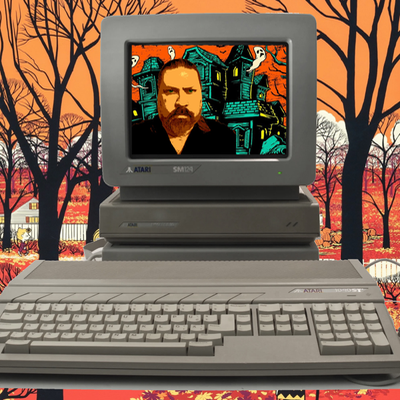
Reminded by a fave to update prompt again for autumn. Source in the alt text.
#zsh #unix
![# MYEMOJI
export XMAS=(
'🎄' '🌲' '🌟' '🎁' '🔔' '❄️' '☃️' '⛄'
'🎅' '🤶' '🦌' '🍪' '🥛'
)
export SPRING=(
'🌱' '🌿' '☘️' '🍀' '🍄' '🌷' '🌹' '🥀'
'🌺' '🌸' '🌼' '🌻' '🌈' '🍒' '🍎' '🍊'
'☕️' '🍵' '🥐' '🍩' '🍪'
)
export AUTUMN=(
'👹' '👺' '👻' '💀' '☠️' '🧙' '🧙♂️' '🧙♀️'
'🧟' '🧟♀️' '🧟♂️' '🧌' '🧛' '🧛♀️' '🥷' '🦹' '🦸'
'🦉' '🦇' '🐺' '🫎' '🕸️' '🦃' '👀'
'🕯️' '⚱️' '⚰️' '🪦' '🔮'
'🍂' '🍁' '🍄' '🍄🟫' '🌛' '🌜'
'🎃' '🍎' '🍏' '🥨' '🧀' '🥮'
'🍭' '🍬' '🍫' '🍿' '🥜' '🌰' '☕️'
)
myemoji() {
emoi=$(( int(rand48() * $#AUTUMN + 1) ))
echo -n -e "$AUTUMN[emoi]"
}
export PS1='%F{red} $(myemoji) %n@%m:%~%#%f '](https://cdn.masto.host/appdotnet/media_attachments/files/117/174/228/707/339/720/original/b6963202c86e785b.jpg "# MYEMOJI
export XMAS=(
'🎄' '🌲' '🌟' '🎁' '🔔' '❄️' '☃️' '⛄'
'🎅' '🤶' '🦌' '🍪' '🥛'
)
export SPRING=(
'🌱' '🌿' '☘️' '🍀' '🍄' '🌷' '🌹' '🥀'
'🌺' '🌸' '🌼' '🌻' '🌈' '🍒' '🍎' '🍊'
'☕️' '🍵' '🥐' '🍩' '🍪'
)
export AUTUMN=(
'👹' '👺' '👻' '💀' '☠️' '🧙' '🧙♂️' '🧙♀️'
'🧟' '🧟♀️' '🧟♂️' '🧌' '🧛' '🧛♀️' '🥷' '🦹' '🦸'
'🦉' '🦇' '🐺' '🫎' '🕸️' '🦃' '👀'
'🕯️' '⚱️' '⚰️' '🪦' '🔮'
'🍂' '🍁' '🍄' '🍄🟫' '🌛' '🌜'
'🎃' '🍎' '🍏' '🥨' '🧀' '🥮'
'🍭' '🍬' '🍫' '🍿' '🥜' '🌰' '☕️'
)
myemoji() {
emoi=$(( int(rand48() * $#AUTUMN + 1) ))
echo -n -e \"$AUTUMN[emoi]\"
}
export PS1='%F{red} $(myemoji) %n@%m:%~%#%f '")
Alt...
# MYEMOJI
export XMAS=(
'🎄' '🌲' '🌟' '🎁' '🔔' '❄️' '☃️' '⛄'
'🎅' '🤶' '🦌' '🍪' '🥛'
)
export SPRING=(
'🌱' '🌿' '☘️' '🍀' '🍄' '🌷' '🌹' '🥀'
'🌺' '🌸' '🌼' '🌻' '🌈' '🍒' '🍎' '🍊'
'☕️' '🍵' '🥐' '🍩' '🍪'
)
export AUTUMN=(
'👹' '👺' '👻' '💀' '☠️' '🧙' '🧙♂️' '🧙♀️'
'🧟' '🧟♀️' '🧟♂️' '🧌' '🧛' '🧛♀️' '🥷' '🦹' '🦸'
'🦉' '🦇' '🐺' '🫎' '🕸️' '🦃' '👀'
'🕯️' '⚱️' '⚰️' '🪦' '🔮'
'🍂' '🍁' '🍄' '🍄🟫' '🌛' '🌜'
'🎃' '🍎' '🍏' '🥨' '🧀' '🥮'
'🍭' '🍬' '🍫' '🍿' '🥜' '🌰' '☕️'
)
myemoji() {
emoi=$(( int(rand48() * $#AUTUMN + 1) ))
echo -n -e "$AUTUMN[emoi]"
}
export PS1='%F{red} $(myemoji) %n@%m:%~%#%f '
Updated my seasonal prompt emoji:
#zsh #unix
![# MYEMOJI
export XMAS=(
'🎄' '🌲' '🌟' '🎁' '🔔' '❄️' '☃️' '⛄'
'🎅' '🤶' '🦌' '🍪' '🥛'
)
export SPRING=(
'🌱' '🌿' '☘️' '🍀' '🍄' '🌷' '🌹' '🥀'
'🌺' '🌸' '🌼' '🌻' '🌈' '🍒' '🍎' '🍊'
'☕️' '🍵' '🥐' '🍩' '🍪'
)
myemoji() {
emoi=$(( int(rand48() * $#SPRING + 1) ))
echo -n -e "$SPRING[emoi]"
}
export PS1='%F{red} $(myemoji) %n@%m:%~%#%f '](https://cdn.masto.host/appdotnet/media_attachments/files/116/017/327/153/812/085/original/23305d0b3d73991f.png "# MYEMOJI
export XMAS=(
'🎄' '🌲' '🌟' '🎁' '🔔' '❄️' '☃️' '⛄'
'🎅' '🤶' '🦌' '🍪' '🥛'
)
export SPRING=(
'🌱' '🌿' '☘️' '🍀' '🍄' '🌷' '🌹' '🥀'
'🌺' '🌸' '🌼' '🌻' '🌈' '🍒' '🍎' '🍊'
'☕️' '🍵' '🥐' '🍩' '🍪'
)
myemoji() {
emoi=$(( int(rand48() * $#SPRING + 1) ))
echo -n -e \"$SPRING[emoi]\"
}
export PS1='%F{red} $(myemoji) %n@%m:%~%#%f '")
Alt...
# MYEMOJI
export XMAS=(
'🎄' '🌲' '🌟' '🎁' '🔔' '❄️' '☃️' '⛄'
'🎅' '🤶' '🦌' '🍪' '🥛'
)
export SPRING=(
'🌱' '🌿' '☘️' '🍀' '🍄' '🌷' '🌹' '🥀'
'🌺' '🌸' '🌼' '🌻' '🌈' '🍒' '🍎' '🍊'
'☕️' '🍵' '🥐' '🍩' '🍪'
)
myemoji() {
emoi=$(( int(rand48() * $#SPRING + 1) ))
echo -n -e "$SPRING[emoi]"
}
export PS1='%F{red} $(myemoji) %n@%m:%~%#%f '

Some delightful notes from @thalia on recent #unix V4 adventures including using ed(1)
https://github.com/thaliaarchi/unix-v4-demo/blob/main/README.md

The real skill is understanding a problem well enough to make the solution simpler. KISS.
Niklaus Wirth was writing about this over 30 years ago:
https://cr.yp.to/bib/1995/wirth.pdf
Looking at today's software, what projects do you think have become unnecessarily complex?
systemd comes to mind for me. What else?
While hacking today, I needed to center some text, normally I do that in BBEdit but this was in shell.
Am I just missing an obvious shell command? for 40 years? Quick apropos or searching didn't turn one up..
Anyway, here's align.py.
no args or -c: Center, -l: Left, -r: Right
-w N: set width if not shell columns.
(WHICH, Python can't get w from os.environ["COLUMNS"] or stty size, had to use shutil. WEIRD.)
#unix #python
![#!/usr/bin/env python
# -*- coding: utf-8 -*-
# Created 2026-06-28 19:19:52
# Copyright © 2026 by Mark Damon Hughes. All Rights Reserved. See BSDLicense.txt.
import os, sys, shutil
def realign(line, align, width):
line=line.strip()
if align=="L":
return line
elif align=="C":
return " "*( int((width-len(line))/2) )+line
elif align=="R":
return " "*( width-len(line) )+line
else:
raise "Invalid alignment %s" % (align,)
def main(argv):
width=0
align="C"
i=0
while i<len(argv):
a=argv[i]
if a=="-w":
width=int(argv[i+1])
i+=1
elif a=="-l":
align="L"
elif a=="-c":
align="C"
elif a=="-r":
align="R"
else:
raise "Unknown argument %s" % (a,)
i+=1
if not width:
width=shutil.get_terminal_size()[0]
for line in sys.stdin:
print(realign(line, align, width))
return 0
if __name__ == '__main__':
rc = main(sys.argv[1:])
if rc: sys.exit(rc)](https://cdn.masto.host/appdotnet/media_attachments/files/117/119/898/779/079/086/original/6099ccf26bb2e7a4.jpg "#!/usr/bin/env python
# -*- coding: utf-8 -*-
# Created 2026-06-28 19:19:52
# Copyright © 2026 by Mark Damon Hughes. All Rights Reserved. See BSDLicense.txt.
import os, sys, shutil
def realign(line, align, width):
line=line.strip()
if align==\"L\":
return line
elif align==\"C\":
return \" \"*( int((width-len(line))/2) )+line
elif align==\"R\":
return \" \"*( width-len(line) )+line
else:
raise \"Invalid alignment %s\" % (align,)
def main(argv):
width=0
align=\"C\"
i=0
while i<len(argv):
a=argv[i]
if a==\"-w\":
width=int(argv[i+1])
i+=1
elif a==\"-l\":
align=\"L\"
elif a==\"-c\":
align=\"C\"
elif a==\"-r\":
align=\"R\"
else:
raise \"Unknown argument %s\" % (a,)
i+=1
if not width:
width=shutil.get_terminal_size()[0]
for line in sys.stdin:
print(realign(line, align, width))
return 0
if __name__ == '__main__':
rc = main(sys.argv[1:])
if rc: sys.exit(rc)")
Alt...
#!/usr/bin/env python
# -*- coding: utf-8 -*-
# Created 2026-06-28 19:19:52
# Copyright © 2026 by Mark Damon Hughes. All Rights Reserved. See BSDLicense.txt.
import os, sys, shutil
def realign(line, align, width):
line=line.strip()
if align=="L":
return line
elif align=="C":
return " "*( int((width-len(line))/2) )+line
elif align=="R":
return " "*( width-len(line) )+line
else:
raise "Invalid alignment %s" % (align,)
def main(argv):
width=0
align="C"
i=0
while i<len(argv):
a=argv[i]
if a=="-w":
width=int(argv[i+1])
i+=1
elif a=="-l":
align="L"
elif a=="-c":
align="C"
elif a=="-r":
align="R"
else:
raise "Unknown argument %s" % (a,)
i+=1
if not width:
width=shutil.get_terminal_size()[0]
for line in sys.stdin:
print(realign(line, align, width))
return 0
if __name__ == '__main__':
rc = main(sys.argv[1:])
if rc: sys.exit(rc)