Search results for tag #fediverse

Quiz: Who isn’t on the #fediverse ?
Sergio Leone "the good, the bad and the ugly" 1966 #filmmusic by Ennio Morricone #cinema #movies #Italian #Epic #spaghetti #Western #fyp

#ActivityPub is built as open standards, federation and trust.
We already have a working example of the kind of left/open infrastructure we need.
So maybe the answer is simple:
Don't overcomplicate what already works. Build on it.
Open public consultation on the EU KIDS ACT. If you have opinions about EU rules for children on social media, age verification, concerns about how this will affect the fediverse, etc... here's the best place to share them: https://ec.europa.eu/info/law/better-regulation/have-your-say/initiatives/19418-Child-online-safety-keeping-digital-spaces-accountable-and-trustworthy-EU-Kids-Act-_en
#EU #KidsAct #EUKidsAct #AgeVerification #PublicConsultation #EUHaveYourSay #fediverse #mastodon #socialMedia
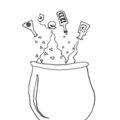
The fear loop is simple - Fear the right → fight the right → feed the right → create more fear of the right → fight the right harder.
Fear becomes the fuel, the response becomes the problem, and the cycle feeds itself.
You can end up fighting the politics you fear in ways that reproduce the fear, division and control that give those politics their space.
The #KISS question is: are we breaking the fear loop, or feeding it?
For the #openweb, that means building from trust, solidarity and collective capacity rather than letting fear set the agenda.

Not that anyone asked but:
- 320 posts on loops: https://loops.video/@Readbean
- 455 posts on pixelfed: https://pixelfed.social/Readbean
- 5000 posts on mastodon: @readbeanicecream
- 94 posts on my blog: https://readbeanicecream.codeberg.page/about.html
All in all, I think I am indiewebbing and fediversing just fine.
#indieweb #fediverse #blogging #mastodon #pixelfed #loops #socialmedia #books #movies #cartoons #scifi #sciencefiction #science #history #tech #blogs

BONJOUR LE #fediverse
on est toutes ensemble ce soir
on est triste mais un peu heureuses
hier au soir on a décidé d'aller ensemble à fukushima sansxsavoir ce quon y ferai ni cequon trouverait
bien sûr on pensait pas trouver shieko mais on voulait aller
mon frère nous a prêté un minibus hayame a le permis on est parties ce matin
on a acheté des fleurs en route
il faut 3 h pour arriver
la côte est désolée cest plein de terrains vagues de dépôts de débris
on a pas pu pénétrer en zone interdite bien sûr il y a des barrières partout
très peu de gens
âgés souvent ils craignent pas les radiations à nos âges ils disent ça a plus d'importance
personne avait vu la voiture bien sûr ça aurait été trop beau
pour finir on est allees au bord des falaises pas loin de la centrale on a lancé nos fleurs la en pensant à chie
son corps nest pas loin on le sait on le sent
deux vieilles personnes nous ont demandé si on rendait hommage à des disparus...
on s'est plus attardees
on est rentrees en silence en pleurant un peu mais c'était comme un adieu cette fois
on sait que on la reverra plus sa grâce sa gentillesse sa gaieté
les larmes viennent en ecrivant ça
cest un peu comme après une catastrophe on se compte entre survivantes
on avait emmené une bouteille de saké chacune a bu au goulot et on a vidé le reste dans la mer
à toi shieko notre amie pour toujours
"Social media algorithms amplify right-wing content against young users’ preference"
I finally re-found this study I read a few months ago, that deserves a lot more attention. It is, in fact, the main reason we should be moving away from big-tech social media: it shows more right-wing content than left-wing content, no matter the political leaning of the user.
Propaganda works. See more of something and you start believing it. And they know it.
#mastodon #Fediverse #Forkiverse #SocialMedia #algorithm #algorithms #politics #propaganda #BigTech #DigitalRights #propaganda #MediaLiteracy #EchoChambers #DeleteMeta #QuitX #LeaveX #Meta #X #Twitter #Facebook #study


I always expected #bluesky to outcompete the #fediverse, especially when it comes to our American friends, who are much more directly marketed to by the corporations.
That said, I think the fediverse (or another federated social network that's not owned by a company) will outlast it.
Bluesky will need to make a profit at some point, which is when the cycle of #enshittification will start for that particular product.
What we need to do is to make the fediverse a more welcoming place to be by that time, which does mean tackling some uncomfortable problems like the amount of casual racism that pops up a bit too much.
Interesting to think about why so much energy in the #Fediverse goes into #BLOCKING. I think it’s become a knee-jerk reaction: despair dressed up as action, covering for political apathy.
The #OMN starts from differences, we know grassroots organization works. The innovation is using technological federation through #ActivityPub to connect and scale these working social processes, without losing the human trust and participation that make them work.
The problem with the #mainstreaming push is that people bring the habits of corporate social media into the #openweb. Instead of learning how a community works, they block, exclude and demand that everyone else change to fit their expectations.
It’s like walking into a working protest camp, refusing to understand its processes, then trying to force everyone to reorganize around you - this actually happens a lot.
Blocking has its place. But when it becomes the default response to disagreement, it stops being a tool and becomes an escape from the harder work of building solidarity, negotiating differences and changing things together.
We don’t build another world by blocking our way out of this one. We build it through collective action, shared responsibility and practical alternatives.
That’s the #OMN path: build working grassroots projects, connect them through open technology, and grow the capacity to act together.
There are few working, humane alternatives to the #deathcult, so stepping away from this mess isn’t an option for many of us. We need to build alternatives that work in the real world to step to.
That’s what the #OMN is about: combining grassroots practices we know work with federated technology like #ActivityPub to connect and horizontally scale them.
#makeinghistory, #IndymediaBack, the #OGB and the #4opens are stepping stones towards a different, more sustainable world.
So only treating #BLOCKING as the default response to disagreement is politically a dead end, and the word #deathcult needs to be used about this.. We need to build solidarity, work through differences and create alternatives people can actually use.
Keep it #KISS: less knee-jerk rejection, more practical work. We won’t block our way into another world. We have to build it.
We have a practical question for the #openweb community. Help wanted: How do we federate metadata flows?
How do we bridge the divide between folksonomy and categories - bottom-up and top-down, open and closed? Each has advantages and disadvantages. Can we find a creative way to connect them without forcing one to replace the other?
The #OMN and #makinghistory #Indymedia reboot are grassroots, bottom-up projects. So we start with folksonomy: people adding their own tags and meaning to the media they publish and share.
But we recognize that categories are also useful. So, here's a simple draft proposal for discussion.
We only have five basic functions in the #OMN. Can we make this work within that simplicity?
* Group folksonomy items into categories. Instances can organize relevant tags into category groups, adding those categories as extra folksonomy tags to the flow.
* Subscribe to category flows. Any instance can subscribe to these category groups as flows - using the basic building block of the #OMN.
* Build it on trust. Categories are offered by communities, not imposed as a universal hierarchy. Other instances decide what to subscribe to, use, adapt or ignore.
This keeps the bottom-up freedom of folksonomy while making it possible to build shared structures across a federated network.
The question is: Can we federate metadata without centralizing control over meaning?
Ideas, experience and practical suggestions welcome. How would you build this?
As a governance model, the #SWF is oligarchic, and alongside monarchy, this is a surprisingly native model in much of the #FOSS movement.
But it isn't native to the #openweb itself.The openweb is, distributed and currently more anarchic. As we reboot it alongside the #dotcons, we need governance that is native to this space - able to talk to, mediate with, and resist centralized power when needed.
That's the gap we address with #OGB, a native tech-social governance path, built around #ActivityPub and the federation model of the #Fediverse itself.
The point is to create governance that federates, to grow organically and work permission across communities.
The #geekproblem keeps looking for governance inside existing institutional paths.This tends to be non native #NGO or #dotcons paths. Were we need native governance that grows from the network itself.
The #OGB in practice
1. Federation, not a central organisation
OGB isn't one body governing everyone. It is a federated governance layer that communities, projects and servers can participate in.
2. ActivityPub-native. Governance functions are distributed through the same federation model as the #Fediverse. Groups can communicate, propose, delegate, challenge and record decisions across organizational boundaries.
3. Permissionless participation. There is no central gatekeeper deciding who is allowed to join the governance network. Communities can connect when they meet the basic protocol/social requirements.
4. Affinity groups rather than permanent representatives. People organize around issues, projects or communities. Authority comes from participation and demonstrated trust, rather than simply holding an institutional position.
5. Sortition and recall. Where representatives are needed, selection is based on sortition rather than elections or permanent appointment. Delegates remain accountable and can be recalled.
6. Dilution of concentrated power. No person, organisation or community is able to accumulate permanent control. Roles, influence and decision-making capacity are deliberately distributed.
7. Voices rather than a single leadership. A small rotating group — 3–5 “Voices” provides coordination and a public interface without becoming a permanent ruling committee.
8. Governance as a protocol/social practice. The important thing isn't creating another institution. It's creating a shared way for autonomous communities to negotiate with each other.
So the example is:
#SWF governance through an institution.
#OGB governance between federated communities.
And that fits the #openweb because the governance model follows the architecture: distributed, federated, contestable and permissionless, rather than centralized ownership.
The interesting bit is that #OGB doesn't have to replace existing institutions. It can talk to them, mediate with them, and provide a counterweight to them while the openweb remains open.
 littleFedi - Official Account »
@littlefedi_official@littleone.littlefedi.social
The Little Computer People Present littleFedi: Our First Public Release
"Hi,
We would like to show you a small project we've built and used over the last few years.
It's a Mastodon-like platform that federates using its own protocol and can work even without HTTPS or public Internet access. Many of us have restrictions on our communications, and this project has helped us stay in touch and have our own social network. We'd love to show it to you and hear what you think, because your OwnYourData message really resonates with us."
The Story
And this email sat ignored for weeks.
It came from an anonymous, generic mailbox, with an even more anonymous and suspicious subject. The spam filter had classified it as, well, spam, for other reasons too. Only when I checked the spam folder again, weeks later, did I move it to the Inbox. "Why not?", I thought. And I asked to see what they had built.
There was no way for me to connect to one of their instances. They trusted me and sent me the code which, although fragmented and loosely put together, compiled and ran natively on FreeBSD. But before that: "We only ask you to never say anything, at least until we're ready. We don't want to be visible and, inevitably, judged or attacked. We tried something else before and backed away. Our software isn't high quality and we know it. But it works, for us, and we have fun building it. When it works we're happy, shut away in our rooms, often in the middle of the night. Sometimes, joking, we say we're like little people living inside our computers and that, thanks to this software, we can talk to each other."
At that moment I smiled and thought of a 1985 video game, from my childhood, that was quite revolutionary at the time: "You're like Little Computer People". They liked it. And that's how the group got its name: the Little Computer People.
My first test went well. I was immediately struck by the lightweight interface. "We have old computers, slow hardware. It has to be light. It just has to!". Abundance led to waste. And yet I preferred that light interface, even if incomplete, to many of today's heavy social interfaces, commercial or not. But the code had gaps, pieces held together with duct tape, unfinished parts. They knew it, they had told me, and they were ashamed of it. "You should be proud of what you're doing. It's beautiful", I wrote to them. "We'll never release it."
The battle, if we can call it a battle, was a long one. They weren't far from making it ActivityPub compatible, and there was already a basic draft implementation (tested only with snac). "We don't want to show it, we don't feel up to it. We don't want to step on the toes of others like snac or GoToSocial, who have done a far better job than we have". I tried to convince them, also because the implementation was moving forward and the results were really encouraging. But no, they didn't feel ready. Until, luckily, one of them made a proposal: "We could release it... but we don't want to be seen. We want to stay in our computers and enjoy our code. We don't want to read praise, criticism or comments. We just want to have fun. Would you like to be one of the Little Computer People too? The human who talks to humans while we keep having fun?". I felt honoured and accepted. Explaining, among other things, that Open Source is not a battle. We are not in an arena, where the existence of one solution means crushing another.
This software is not a slight against Mastodon or snac or GoToSocial, but one more choice. Nobody gains. Nobody loses. It's there. It exists. It's something beautiful, one more thing in the world. They agreed, leaving the license undecided and keeping the strictest confidentiality.
The software had no name. But after we came up with the group's name, we affectionately called it our "little social". After the first real, complete ActivityPub federation (with proper tests), the current name was chosen among the alternatives: littleFedi.
"You have more experience... what should we implement?". I thought about it, looked at what was still "in the oven" and what I'd really like to have. I made a list, detailed and very long. But the most important part, for me, was blogging.
Then something happened, and development had to stop. Some devs could no longer work on it. Others weren't able to touch what the others had built. There was only one person who could carry on, albeit slowly, but their computer had broken and they could only communicate by smartphone. They couldn't buy another computer. And yet, a few days later, they received one. Ready to go. With FreeBSD inside.
littleFedi risked stopping right there, with part of the team still against any public release, at least at that point. But sometimes things work themselves out just when you least expect it, and in a short time the "little" humans were back in their computers, having fun, unwinding, creating something beautiful. Until a hot day this summer, when I asked their permission to make my first littleFedi instance public, running on my Raspberry Pi Zero W. One of them was against it at first. Then changed their mind. And I did it, announcing it to the world: https://rpi0w.stefanomarinelli.it/@stefano/blog/2026/07/01/littlefedi-light-yet-complete/
They don't want to interact with the world, but I still decided to show them the comments - all positive. That evening, the private test instance started showing (without me knowing) balloons and streamers every time we logged in. It was a party. And that made my next task easier, leading to the first public instance: littleOne
When I announced it, a lot of friends chose to join the test, and thanks to them a huge number of issues were found and fixed. A huge thank you to them. I acted as a bridge between them and the team, fixing and implementing what I could myself. I'm not primarily a dev but a system administrator, and I prefer not to touch what I don't know. The enthusiasm of the Little Computer People, though, was obvious even without them saying it: bugs were fixed in minutes, hours at most. We merged test branches quickly, so the friends on littleOne could try them.
Towards a Release
The last two months saw a lot of development, but mostly focused on reviewing and cleaning up the code. With one single goal: a first public release. The chosen license, after some thought, is MIT. The point is to give it to the world. This software was born from people who want to communicate with other people, and that's what matters. It's a means, not an end. Because those who don't have freedom dream of freedom without restraints.
There is much more documentation than what we're releasing today, along with tests and internal material that still needs to be reviewed. Some parts describe the project as it was designed, not necessarily as it was later implemented. Others haven't been checked enough yet to be published as reliable documentation. So we chose to release now what's ready: all the code needed to run littleFedi and enough documentation to get started. Not everything has been tested and certified in all the combinations we'd like, but what we're releasing is mature enough to be tried and used.
As of today, littleFedi is available from the downloads page at https://littlefedi.org. There won't be versioned releases for now, just snapshots of the code, both as source and as prebuilt binaries. What matters today is putting the tool in people's hands. Later, when things are ready enough, we'll probably move to good old git, on the BSD Cafe Forgejo. The sources already point there, but that project is currently private (and intentionally empty).
What Is littleFedi
So what exactly are we releasing today?
littleFedi starts from a very simple idea: owning your own social space shouldn't require complex infrastructure. In its basic form it's a single static binary, a configuration file, SQLite and your media on the filesystem. You copy it to a machine and start it. The minimum "certified" target today is my Raspberry Pi Zero W running NetBSD, powered over USB by my switch. It's designed for small, single-user instances, but also for larger ones, with the option to use S3 for media storage (the main space problem of single-user Mastodon instances) or PostgreSQL instead of the built-in SQLite. How large can an instance be, exactly? We don't know yet. The code is there, ready to be tested. We'll leave that for you to find out! You can also already migrate the storage (live), not the databases yet (but there's a partially implemented draft, so that will come too).
There are some rather unusual features, bringing together some of the nice ideas found in other implementations. It's written in Go, and Go allowed us to do something I care about a lot: FreeBSD, illumos, Linux, NetBSD and OpenBSD are not secondary ports of software designed only for Linux. Each one has its own operational documentation. It has a low power mode, lets you schedule a post or set, post by post, an expiration (propagated to other instances). It has a light and simple web interface, yet complete, with no frills, reasonably usable even without JavaScript. Care went into making the PWA pleasant and usable and, even with a few bugs left, it's in my opinion one of the best ways to use littleFedi. And, yes, if you don't want to use its web interface, littleFedi also speaks the Mastodon API: many existing clients can connect directly. It supports emoji reactions. It supports push notifications. Post visibility follows the usual Fediverse model, with two additional variants: Local and Local Unlisted. Because not every post we write needs to leave our instance. And, speaking of federation, it has a fairly clean approach: by default, it federates with everyone. But it also supports blocklists and allowlists. Yes, allowlists: you can choose a list of instances to federate with, and that's it. Only those. Activities to and from all the others will be silently dropped, to give you an experience tailored to your expectations. "Filter bubble?". If you want to call it that. I call it the freedom to decide who your instance talks to.
And there's no need to doom scroll for fear of missing something: timelines are chronological, yes. But there's an optional Catch-up for when you come back after a few hours or days. It lives on a separate page and never decides what shows up in your timeline. If it shows you something, it also tells you why.
But there are too many features to list here, it would become a boring list. The only way is... to try it. Worth mentioning, in my opinion, for how peculiar they are, are two main features: littleMesh and Blog.
littleMesh, Blog and OwnYourData
The first, littleMesh, is an alternative transport mode for federation. Remember the first email, when they talked about their own federation able to work even without public Internet? That idea didn't go away. It evolved into littleMesh. Two littleFedi instances can communicate even behind NAT or CGNAT, with no public address, DNS or inbound ports. All it takes is an external lighthouse. If you also want to talk to the traditional Fediverse, an HTTPS gateway comes into play. ActivityPub, though, stays ActivityPub.
The blog feature is something I had in mind for a long time, and many of the friends who tried it on littleOne loved it. I like how WordPress federates into the Fediverse, but it's a CMS that federates. I wanted something different: a Fediverse platform, with a decent editor, that generates a static site. Simple, BSSG style, but complete and "eternal". HTML files, no need for JavaScript or images. Text is text, and I've always wondered why extra computation should be needed to show…words. When I saw the first draft, I fell in love with it. And I know those sites will still be readable in 10, 20, 30 years. Even without littleFedi. Because social networks are, by nature, ephemeral, but our ideas and thoughts sometimes deserve to stay. And above all, you're not publishing the same thing twice. The post is the same one. It federates normally and, if you choose it as a blog post, littleFedi also generates a static version of it. There's no CMS to keep in sync with the social network.
But littleFedi doesn't want to cage you or hold you back. It supports account migration (to and from other instances), and it also lets you export a full archive with all your content, which can then be imported into another littleFedi instance. Sure, in that case domain and handle will change, but the content will stay, just at a different address. OwnYourData: it doesn't matter which drawer it's in, as long as it's your drawer. And, just like Mastodon, you can self destruct your instance: take it off the Fediverse, politely saying goodbye to the other instances and asking them to remove our keys and content from their databases. Because the Little Computer People don't want to make noise or bother anyone. They just want to communicate, and leave with a smile when it's time.
Ready?
In the last few weeks some friends have taken a look at the code and confirmed what we already knew. It may not be textbook code, but we're releasing it. There are well-engineered parts, others much less so, some to be reworked, many to be analysed, but it's a step. If we aimed for perfection we would never release, and promises are promises.
I'm ready. The Little Computer People are ready. And the code is there, for anyone who wants to try this new communication project. The roadmap is already full of nice things to do, and more will be added. We're not in a hurry, it's not a competition. We want to do things properly.
For your first instance, all you need is a computer and a reverse proxy. Download the source and build it, or grab the prebuilt binary from the downloads page:
./littlefedi init
./littlefedi --config littlefedi.toml
And you're ready to federate with the world.
Happy communicating, and use it well. We're going back into our computers.
Stefano - @stefano@bsd.cafe
What can we do in a world being wrecked by #stupidindividualism? There is no individual defence against a social problem. If we keep treating everything as personal choice, personal responsibility and personal survival, we just reinforce the problem.
So the real question is - how do we rebuild collectives? In tech, not another shiny platform, not more individual self-help.
We need practical spaces where people meet, organise, make media, share resources, build trust and take collective action.
then online #OMN, #OGB, #indymediaback and the #4opens are projects ready to become part of that change and challenge.
Ideas welcome, we need to start balancing the collective again.
It should be more obvious by now that #mainstreaming culture is a #DeathCult.
The question that matters now is: what non-obvious alternative cultures could actually become the difference we need? It's what I've been working on with #OMN, #indymediaback, #OGB and the #4opens.
They are from underground ideas and practices we already know work, then add the useful parts of #openweb technology to sprout small seeds → connected communities → practical alternatives → real change.
Not more shiny ideas or another round of #techchurn. But something we can actually build.
PS: please don't be a prat.
The #geekproblem isn't just a negative label. It's about taking the obvious problem out of “geek” and looking at what happens when geek culture meets power and capital.
Look at #failbook and Google: geek projects that became systems of domination and control. But that's not inevitable.
So what does healthy #openweb geek culture look like? Look back at early #Couchsurfing and #Indymedia. There are examples of geek culture building trust, participation and community rather than control.
And look at both projects later in their decline - you can see the #geekproblem emerging.
The question isn't “are geeks the problem?” It's - what kind of culture does our technology reproduce, and who does it give power to?
I realized many years ago that the #geekproblem has no clue what to do with the #OMN.
As its value sits outside the narrow value system of tech, platforms and capital, so they simply don't see it. And if you can't see the value, you have little motivation to ask what it could become.
So stop for a moment, step outside the current mess, you need a shovel. If you don't get to the roots of social problems, they just keep coming back.
The #OMN is about digging into those roots - the structures and habits of the #deathcult that keep reproducing the same mess.
Don't just clean up the shit on the surface, dig.
The #OMN is a mission to flip the script, it's #FOSS grounded in the #4opens as a social movement, not just a code project.
The path is detox the #UX - moving people from passive content consumption and addiction towards active, collective media-making.
Not another platform to consume, a commons of media where people can publish, participate, moderate and build together.
The technology matters, but the social change matters more.
The #encryptionists are the people who take that minority use of this tech and pushing it into everything. The bigger issue is the #geekproblem: seeing a technical problem and reaching for a technical solution when the actual problem is social.
If we want to rebuild society around trust, that is primarily a social challenge with social solutions.
Encryption can protect some things. It cannot create trust. But, trying to solve social distrust by encrypting everything is not just pointless - it can actively #BLOCK the harder work of building relationships, communities and shared responsibility.
The geek answer is often "We can code around that.” were the social answer has to be “Maybe we need to change how we relate to each other.” That's harder, but that's the work.
JOURNAL
ca me coûte d'évoquer ce qui va suivre mais faut que je dise
le médecin legiste a trouvé des griffures sur le corps de ce salaud
sur le cou du cote droit
des coups raporoches sur lavant du tibia droit
traces recentes
ca signifie pour lui
la victime a été attaquée par derrière
elle s'est defendue mais elle a très vite cessé
il pense l'agresseur a utilisé un lacet pour l'étranger le flux sanguin est très rapidement coupé entrainant une perte de connaissance très rapide
les mains de l'agresseur devzit se trouver derrière sa nuque c'est pourquoi elle n'a pu atteindre que le cou
pour l'enquêteur la voiture devait etre garée devant l'entrée il y a une place arrêt 15 minutes pourbles livraisons de la petite ´boutique à côté
celle ci ouvre plus tard
le gerant descend generalement 1/2 h après shieko
il ny a pas d'autre mouvement dans l'immeuble qui n'a que 2appartements
lagresseut devait attendre shieko dans un ecart derriere lescalier dans le hall
il disposait d'au moins 20 minutes
la lutte n'a pas duré plus de 1au maximum 2 minutes
il a pu charger le corps dans la voiture fouiller le sac de shie trouvé le hanko monter un etage et glisser la lettre sous la porte puis repartir le tout en moins de 20 minutes
pas un cri pas un bruit
notre shie ne s'est pas laissée faire mais sans entraînement elle ne pouvait rien
ce genre d'agression on a une ou deux secondes pour sen sortir pas plus à condition de savour précisément comment faire
le cerveau cesse très vite detre capable de réagir
cest affreux
les larmes me viennent
si javais été là...
ppardon je peux pas dire plus
BONNE NUIT LE #fediverse
❤️🧡💛💚💙💜❤️🧡💛💚💙💜
Yep! Free speech advocacy on the fediverse https://alexschroeder.ch/view/2024-08-05-free-speech-on-fedi #Fediverse #Privacy
This is the mess you need to help to compost #DIY. The #Fediverse is social tech built by people https://hamishcampbell.com/the-fediverse-is-social-tech-built-by-people-who-dont-understand-the-community/
People in the #Fediverse, like #mainstreaming people generally, can be blindly individualistic. This narrow, dogmatic worldview is a form of social #BLOCKING called it #stupidindividualism: the habit of seeing social problems as individual problems, individual choices and individual responsibilities.
It makes it harder to see where power actually lives - in groups, communities, institutions and social structures. And that makes it a serious #BLOCK on the challenge and change we need.
We need to balance individualism with collective thinking, participation and action.
Back in the #mainstreaming world, the #dotcons are shaping young people into a future where they know little beyond worshipping the #deathcult.
It's a shit-heap mess, but shit is compost. The #Fediverse is a handle of the #OMN shovel.
We don't need another shiny platform. We need to start turning the mess over, making space for something else to grow.

Have you ever met someone from the Fediverse in person to do something together?
I don't mean at a Fediverse-related event. If you have, I'd be curious to hear what kind of activity brought you together.
I've seen people from other social media platforms organize offline activities and meetups, Facebook and Instagram (Meta), Orkut (Google), and Twitter (now X), and I'm curious whether this happens through the Fediverse too.
Please, boost to find more activities, if any.
#SocialMedia #Meetup #Fediverse
| No: | 22 |
| Yes (please, comment): | 10 |
Metropolises Trivia Game. With best wishes and a recommendation to check out the following on loops.video
▶️ @urbanlens@loops.video
▶️ @talesfeomthesbahn@loops.video #LoopsVideo #Fediverse
A lot of #P2P projects keep failing socially because adoption stays tiny. The #Fediverse has done better socially because it keeps the familiar social #UX.
So maybe the path forward is a half-step: Bridge #Fediverse + #P2P in real, usable ways until decentralized clients become socially relevant.
We need bridges and killer apps. Seamless UX where federated and p2p content feels like one stream.
A server that can read from both channels without making users care which protocol is underneath. That's the #KISS path.
Build the bridge first.
Make it useful.
Then decentralize the foundations underneath.

#fashion #patreonspecial #ai #neverslop #chatgpt #claude #anthropic #unix_surrealism #fediverse

Alt...
matabot in a rougue dress


RE: https://mastodon.social/@bader2000/117248402113196382
My dear brothers and sisters, please don’t leave us alone during these difficult days. I have no one to support me and my family except God. Since I started my campaign, I have received only $14 in donations. 🙏🏻
#Gaza #Humanity #mutualaid #MutualAidRequest #MutualAidBoost #MutualAidThread #FediforGaza #FediHelp #MutualAidRequest #Fediverse #Rent #HelpingHand #mutualaidspace #support #boostwelcome #givingtuesday